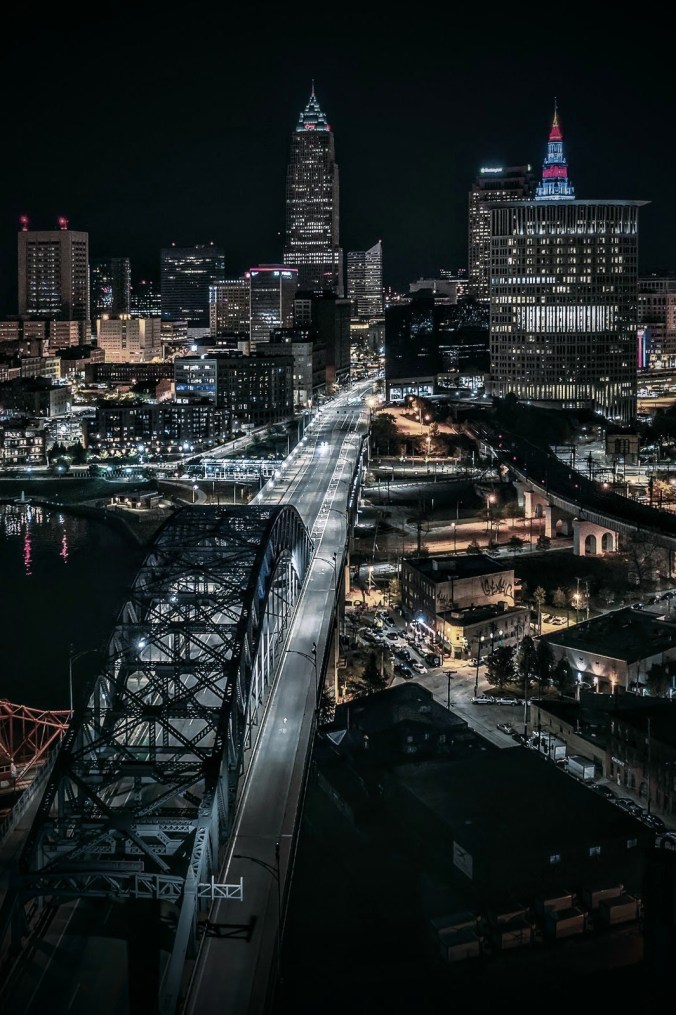
At the meeting point of the Englehart and Brennert Rivers sits the largest natural harbor on the North American Eastern seaboard, which English explorer Sir Roger Marshal purchased from its indigenous inhabitants for a few furs and a pile of empty promises. He gave that harbor his name, Marshal Bay, and upon its shores would grow the metropolis known as Titan City.
Standing with one foot planted on the easternmost point of this peninsula and the other stepping out over Marshal Bay, the hundred-foot tall statue of the Spirit of Prosperity, an armor-clad angel of steel, opens her arms to the rising sun and to the old world of Europe, from which Titan City’s first colonists arrived. With this gesture she welcomes any and all, declaring this land rife with opportunities for the taking.
No delicate blossoms took hold in Titan City. The hardy souls who laid out its gridline streets, erected its skyscrapers, and built up its industries did so with a determination to scramble and scrape without succor. To those who gambled their fortunes upon her, Titan City gave 100-to-1 odds, launching dynasties and bursting dreams.
The hillsides ringing Titan City to the west, down whose slopes the Englehart River carved its path, offered escape from Titan City’s relentless demands to those who could afford them. Upon those hills was built a new Olympus, each stately manor a private play palace. From such lofty heights, the most fortunate of Titan’s citizens could gaze down upon its lights and its smoke, its workhouses, its ships, and its struggles from afar, reaping the choicest rewards for the least sacrifice and never truly knowing the suffering of those whose labors built their wealth in the city below.
Toward the end of the 19th Century, efforts were made to placate the citizenry with the same “bread and circuses” once used by Roman emperors. Titan City staged free concerts in Keaton Park, parades down First Street, and fireworks over Marshal Bay each Fourth of July. Yet no spectacle could stir empathy in its robber barons or sate the envious hunger of the masses below. And when the halls of power routinely defend the privilege of the few over the many, what recourse is there but that of criminal activity to vent their unrest, a directionless, frustrated chaos for which all suffer, the poor and mighty alike?
It was into this Titan City that the Crimson Wraith was born — not as a man, but as an inevitability. His grisly skull mask bore witness to the death of civility, charity, and community, the sanguine hue of his costume, a memorial to blood unjustly spilt. He came to remind us of the hope in humanity we had cast aside, to protect us from ourselves before we even knew to ask for him.
— Chief Harlan Goodman, Titan City Police Department
Discover more from Legacy of The Crimson Wraith
Subscribe to get the latest posts sent to your email.
